The Battle for Buckeye Federal
The dramatic 1976-1977 hostile takeover that ended 60 years of Guthrie family leadership and forever changed Central Ohio's largest savings and loan
The Battle for Buckeye Federal
(Click to enlarge)
From a relatively placid institution with an unbroken record of stability and growth, Buckeye became almost overnight a target for considerable speculation... No matter who comes out on top, Buckeye Federal will be a far different place.
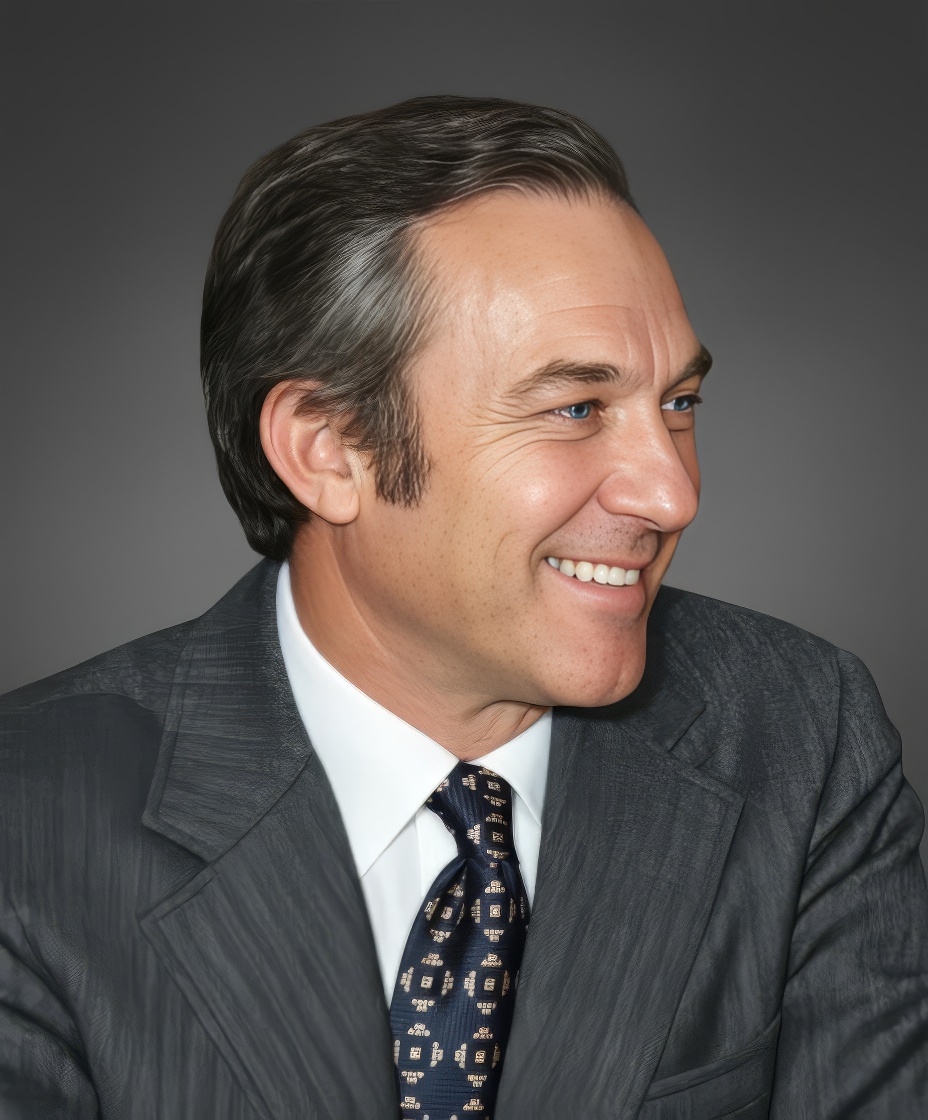
William S. Guthrie
Chairman & CEO
(Click to enlarge)
A Family Institution Under Siege
As the waters of the great Columbus flood of 1913 began to recede, a young man named C. C. Guthrie hustled out to the soggy West Side to help with salvage operations. "I wasn't a carpenter, but I could do a little carpenter work," he recalled nearly six decades later, "so I jumped in, and some of those two-story houses - we cut the bottom off because it was wrecked, and we made it a decent one-story house."
Guthrie's work saved the Buckeye State Building and Loan Company thousands of dollars in mortgage losses and impressed his bosses enough that they offered him a seat on the board of directors the following January. Thus began more than 60 years of Guthrie family dominance in what is now Buckeye Federal Savings and Loan Association - the largest S&L in Central Ohio with nearly $700 million in assets.
As Buckeye became a Columbus institution, so did the Guthrie family. Both established reputations for civic concern and progressive policies, perhaps a shade more liberal than the norm. To many, Buckeye and the Guthries seemed to belong together. Current board chairman Bill Guthrie, C.C.'s son, made almost any list of Columbus' most powerful people. And with two of Bill's own sons moving up in the organization, it seemed almost a foregone conclusion that the Guthrie name would stay at the top of the list of officers painted in gold on the window of Buckeye's gray, decorous headquarters at 36 E. Gay St.
The Fatal Decision
The Irony of the Stock Conversion
The biggest irony may be that none of the past year's upheaval had to happen. Because depositors in a mutual association almost never challenge their management, the Guthries could have continued in control indefinitely had they stayed with mutual ownership. But for what they still see as sound business reasons, they chose the much more risky path of stock conversion. Like Samson, they took their stand and pulled the temple down around their own heads. Call it stupidity or call it family pride, but even today, knowing the outcome, they say they'd do it all again.
When his father, C.C., retired as Buckeye's chief executive in 1961, Bill left a 25-year administrative career at Ohio State University to succeed him. He says he spent that long in the relatively low-paying halls of academe "to prove to myself that I didn't have to be part of a family-owned business." Under Bill Guthrie's management, Buckeye's assets increased almost eight-fold, from about $80 million in 1961 to $610 million by last December.
But first there was the stock conversion, planned to be Bill Guthrie's last major accomplishment. Tough Federal Reserve regulations and relatively low earnings in 1974 and 1975 had squeezed Buckeye until new capital was badly needed to allow new growth in savings and loans. With Steve Guthrie in charge, Buckeye developed a plan for conversion from mutual to stock form which called for issuing about 1.2 million shares of common stock to raise about $10 million in new capital.
The Federal Home Loan Bank Board and a majority of Buckeye's depositors approved the plan, but then the problems began. By law, a converting association must offer first crack at its stock to existing depositors and borrowers. The Guthries hoped that most depositors would exercise their right to buy stock at the offering price of $9.25 a share, thus guaranteeing wide distribution. But only about one-third of the shares were spoken for in the initial subscription. Disappointed, the Guthries still considered the response sufficient to proceed to the next stage - a public offering of the remaining shares.
After one false start and a hasty change of underwriters, the stock issue went on the block on Sept. 2, 1976, and sold out relatively quickly. Although the Guthries weren't immediately aware of it, part of the reason for that brisk sale was that S. Robert Davis was gobbling up chunks of stock from a variety of brokers around the country.
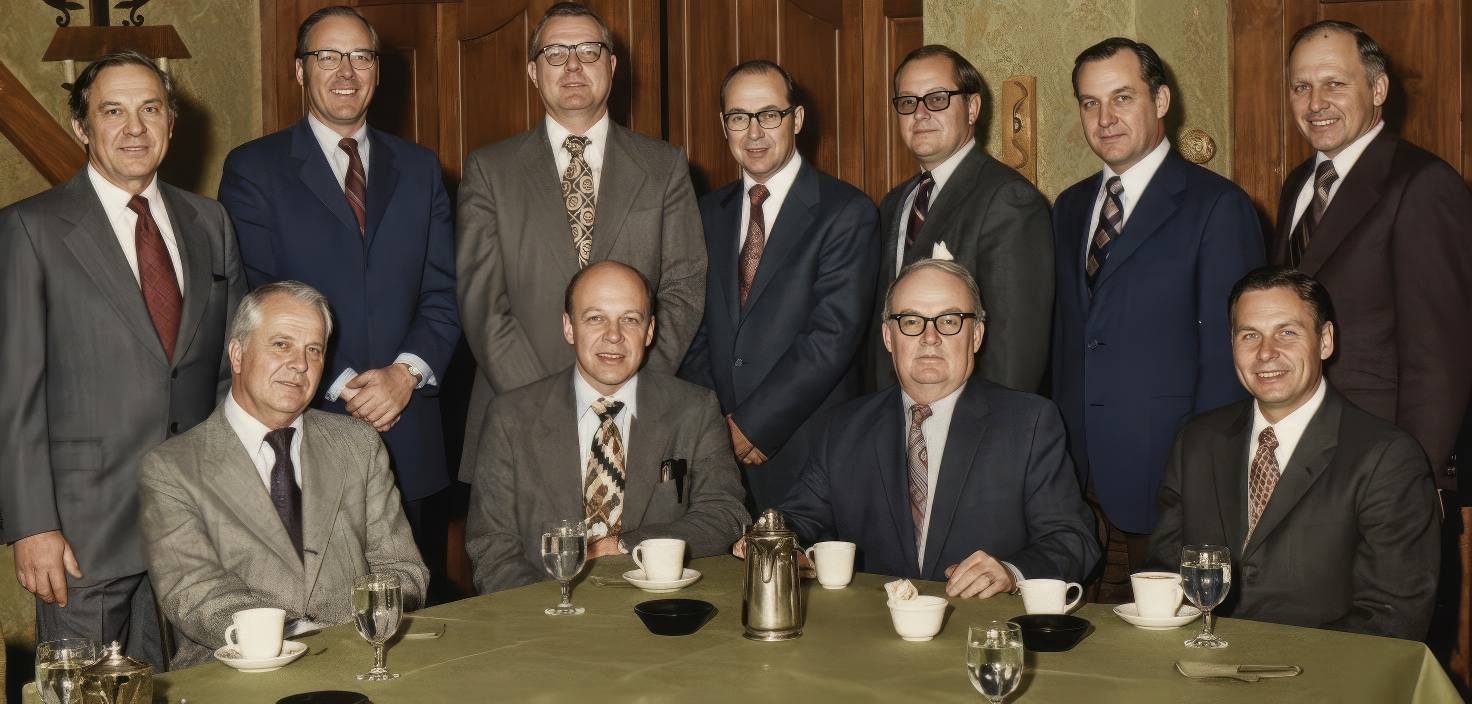
William S. Guthrie and others, undated (AI enhanced)
(Click to enlarge)
Enter S. Robert Davis
Nobody thought to check that game plan with S. Robert Davis. Davis had made big money early by being at the right spot at the right time in the fast-food boom. Only 40 years old, he was rich, amazingly liquid, and maybe a little bored with the day-to-day chores of running Orange-co, the parent company of Arthur Treacher's Fish & Chips and a batch of Florida citrus operations.
Davis says his interest began with the chance arrival of Buckeye's stock prospectus in the mail as he, his family and several of his children's friends were leaving in a rented GMC bus for a vacation on Lake Temagami in northern Canada. "When we got to Canada," he recalls, "I took the mail out fishing.... The fish don't bite with any frequency on Lake Temagami, so you do have time to do some reading. In analyzing it, [the Buckeye prospectus], I felt there would be a substantial change in the direction of improved earnings."
To hear Davis tell it now, buying Buckeye stock was simply a good investment decision. "This is a business transaction for me," he says, "and it doesn't involve a lot of personal feelings. I have no hostility toward anyone."
But to others - particularly longtime friends of the Guthries - Davis' moves looked like a calculated, ruthless power play, intended from the start to drive the Guthries out and put himself in control of Buckeye.
Whatever Bob Davis' motivations may have been, the Buckeye conversion couldn't have come at a more fortuitous time for him. He had just netted a cash windfall of almost $1.5 million from selling 55,000 shares of Wendy's International stock in the burgeoning hamburger chain's first public offering. That money barely had time to reach a bank vault before Davis began shoveling it out again for every share of Buckeye stock he could find.
Timeline of the Takeover
The Opening Salvo
On the first day of the public offering, Davis immediately snapped up an additional 59,900 shares from 10 different brokers. Davis' largest single purchase - 30,000 shares from Bache Halsey Stuart - was exactly the maximum Buckeye had instructed its underwriters to permit a single buyer to purchase. Although Buckeye later argued that Davis' buying should have been cut off at 30,000 shares, there was probably no way for any broker to have known during the early selling how many shares Davis was buying from any other broker. And Davis himself was shrewd enough to spread his purchases around.
The Accumulation Phase
In one day, Davis amassed about 5 percent of Buckeye's total stock. But he was far from finished. Buying in blocks as small as 500 shares and as large as 10,000, he accumulated 90,000 more shares in September, and continued buying at a slower pace until Nov. 10, when his holdings reached 175,000 shares - about 14.3 percent of Buckeye's stock. Not at all coincidentally, Davis' purchases ended precisely on the effective date of a Federal Home Loan Bank Board regulation prohibiting anyone from buying more than 10 percent of the stock of a converted federal S&L without FHLBB permission.
The Shocking Meeting
Shortly after lunch, the Guthries arrived at Orange-co's squat but expensively-decorated new $1.7 million headquarters on Dublin Road to meet Davis and his attorney, Charles F. Dugan II, a shrewd tactician specializing in corporate securities work for Vorys, Sater, Seymour & Pease. The Guthries had already decided to extend an olive branch to Davis by offering him a seat on the Buckeye board of directors. But in what must have been one of the more shocking meetings in Bill Guthrie's career, Davis almost casually splintered the olive branch. Bill Guthrie later recalled Davis' saying to Dugan, "Let me take this. I want to do something a little different from what we had planned." Davis then explained, according to affidavits filed by the Guthries with the FHLBB, that he had a foolproof plan to take total control of Buckeye's board at the annual meeting the following April.
The Second Meeting
Davis' tone had softened considerably when the same four people met again at Davis' request. "Mr. Davis opened with apologies for the misunderstanding which he created in the previous meeting," Steve Guthrie later said. "He wanted us to know his intent was not to control Buckeye and not to be chief executive officer - now or in the future." Davis' own recollections of this second meeting are much closer to those of the Guthries. "I sought to convey to the Messrs. Guthrie the fact that I had never intended to seek control of Buckeye," Davis said in an FHLBB deposition.
The Defensive Merger
In early February, two months before Davis was scheduled to get a board seat, the Buckeye directors approved a merger, largely engineered by Steve Guthrie, between Buckeye and Transohio Financial Corp., a Cleveland-based savings and loan holding company with more than $1.3 billion in assets and major affiliates in Cleveland, Akron and Cincinnati. The merger proposal, involving a tax-free exchange of 1.25 shares of Transohio stock for each share of Buckeye, was a good one for both sides, the Guthries argued. Davis said Buckeye's shareholders, including himself, would have been ripped off. The one point all parties agree on is that Davis' post-merger holdings in Transohio would have been much too small to give him control.
The Compromise
Calling the merger "a classic minority shareholder squeeze-out technique" and an "illegal scheme," Davis and his attorneys launched a dramatic counterattack. Among other maneuvers, they formed the Buckeye Shareholders Committee and threatened a full-scale proxy battle at Buckeye's annual meeting on April 11. Faced with the prospect of a bloody proxy battle, the FHLBB intervened. Within two weeks, attorneys for the FHLBB, Buckeye and Davis hammered out an "undertaking" - a written agreement to defuse the escalating hostilities. Buckeye agreed to expand its board from nine to 11 members immediately following the annual meeting and to appoint Davis and Dugan to the two new seats.
The New Order
Guthrie had announced at the annual meeting in April that he intended to step down as chief executive within a year. As soon as he was appointed to the board, Davis joined the personnel committee, which launched an immediate search for the new CEO. In relatively short order the search narrowed to four candidates - three inside Buckeye and one outside. Steve Guthrie was effectively vetoed by Davis. That left only the outside candidate - David Cook. A former Federal Housing Administrator commissioner and president of the Galbreath Mortgage Co. for 11 years, Cook had returned to Columbus late in 1976 as a real estate consultant for Chemical Bank of New York. Cook's appointment, effective July 1, was announced in late May. On the same day, Steve Guthrie turned in his resignation as a vice president. He has since moved to Colorado. On the day Cook assumed command, Bill Guthrie relinquished all his administrative duties.
The Final Blow
Perhaps most significantly, Cook presided over the burial of the Guthries' proposed Buckeye-Transohio merger. Frustrated by the FHLBB's inaction, Transohio proposed in midsummer to change the proposal to a straight taxable exchange. Transohio later upped the ante to 1.35 shares and $1.50 for each Buckeye share, and told Buckeye it might go ahead with the offer even if the Buckeye directors didn't like the new plan. This last shift effectively reversed the relationship from friendly to unfriendly, and in late September Buckeye's board politely but firmly said, "No thanks." The 60-year Guthrie era was officially over.
The Key Players
40-year-old chairman of Orange-co, accumulated over 200,000 shares (25%) of Buckeye stock worth $3.1 million. Shrewd investor with a reputation for ruthless financial tactics.
Chairman & CEO, led Buckeye for 16 years, grew assets from $80M to $610M. Son of C.C. Guthrie who began the family's 60-year reign in 1914.
37-year-old Senior Vice President with national reputation in marketing and electronic fund transfers. Lost his chance to succeed his father as CEO.
Former Federal Housing Administrator commissioner and Galbreath Mortgage president. Acceptable to both Davis and the Guthries as new chief executive.
Corporate securities specialist from Vorys, Sater, Seymour & Pease. Davis's key legal strategist who joined the Buckeye board alongside Davis.
Wendy's International founder and Davis's close friend. Bought substantial Buckeye shares, though Davis claimed they never discussed it.
The Aftermath
Within weeks after Cook's arrival, Buckeye's management began to change. First Hylas Hilliard, a longtime Guthrie comrade, resigned as a director and senior vice president. Buckeye's announcement said Hilliard left voluntarily to devote more time to his private law practice, but others describe an emotional scene in which Hilliard pleaded with Bill Guthrie to save his job, only to be told that Guthrie no longer was in control and nothing could be done.
Next Kunze, who had been kicked upstairs to a meaningless job as vice chairman on Cook's arrival, landed a job as executive vice president of Gate City Savings & Loan Association in Fargo, N.D. He was gone from Columbus by Labor Day.
With both Guthries, Hilliard and Kunze removed from Buckeye's management, Cook had a relatively free hand. He used it firmly, shrinking Buckeye's staff executive committee from 12 to five, consolidating operating divisions, making some quick internal promotions, and bringing in a highly-regarded cost-control expert from Florida. The sale of PassCard Systems Inc., Buckeye's electronic funds transfer subsidiary, was initiated by Steve Guthrie, but completed by Cook.
Bill Guthrie's Reflection
"The institution and its future is more important to me than Steve Guthrie or my own pride. In the long run we're going to be a better institution. The next 10 years will prove the wisdom of the stock form."
In light of all that's happened, Bill Guthrie could well be forgiven for cursing the day he decided to convert from mutual to stock form. He's been all but forced into an undeclared early retirement. One son's chance to become chief executive has been blown to bits, and the other's job is rumored to be in jeopardy. Some of his old friends inside Buckeye criticize him bitterly for selling them down the river, and some outsiders are wondering aloud whether he took temporary leave of his senses when he proposed the conversion. Perhaps most galling, he's seen his own position in Central Ohio's civic leadership slip, while S. Robert Davis - whose hard-nosed ideology and ruthless style are alien to everything Guthrie cherishes - has vaulted upward to become someone who must be reckoned with.
But Guthrie remains characteristically civil, almost gentle, and unwilling to lash out. "The institution and its future is more important to me than Steve Guthrie or my own pride," he says. "In the long run we're going to be a better institution. The next 10 years will prove the wisdom of the stock form."
The Personal Cost
David W. Guthrie's letter to Buckeye employees following his termination, November 1977
On Wednesday afternoon, November 2nd, I was informed by David Cook that my employment at Buckeye was to be terminated. I was told that I could pack up immediately and that I would be paid until the end of the month. I was told that this was the unanimous decision of the Directors of Buckeye Service Corporation as well as of the Executive Committee of Buckeye Federal Savings and Loan. It was suggested that I resign. I said I would not. I requested that the reasons and/or rationale for my termination be furnished to me in writing. I have received nothing. Prior to the meeting November 2nd, I had been given no indication that my firing was imminent.
Apparently, it had not occurred to anyone that Buckeye Service Corporation, being an independently chartered entity, would have specific procedures for the removal of an officer. I pointed this out and on Wednesday, November 9th, a special meeting of the Directors was convened. At this meeting I was summarily removed from the office of President of Buckeye Service Corporation. This might be regarded as curious in itself since, over the years, all strategy (and many operational) decisions have been decisions of all of the Directors. The record: Buckeye Service Corporation survived the real estate depression of 1974-76; during 1977, we made great progress. Although Buckeye sold out its interest, Windrush Creek is now a success. Land sales from the Georgesville Road tract are pending. At Indian Trails, ninety-eight lots, for gross revenues of approximately $1 million, have been sold in just sixteen months. The Indian Trails PUD was approved by the FHLBB as a thirteen-year project, ending in 1986. It is off to an exciting start. I have attempted to explain to the Directors that cost accounting for large-scale real estate projects requires a technical expertise that Buckeye does not have. Buckeye really will not know how Indian Trails is doing financially until outside help is sought. To back off of Indian Trails now would be to waste an asset of considerable future value.
Now, having said the above, I want to state that I have absolutely no quarrel with a new management's prerogative to choose its own team. I am sorry not to be a part of it. When I was outspoken, I did not mean to offend. It simply is my belief that better decisions are made when all ideas are on the table. I regret that my continued participation at Buckeye seems to have been perceived as threatening by some of my colleagues. I always believed that there was enough challenge at Buckeye to keep everyone busy.
A specific matter that I would like to address is the way things have been done at Buckeye recently. I have observed an increasing lack of consideration and sensitivity in the treatment of people; this is totally unnecessary. Those of the new power structure would do well to contemplate that arrogance, once accepted as the norm in dealing with others, may come back to haunt. We all take our turn on the defensive. Finally, it is just my luck to get sacked in November rather than June. A summer of leisure on unemployment would not have been all bad. Our situations are always changing, but friendships remain. That is the important thing. Good luck.
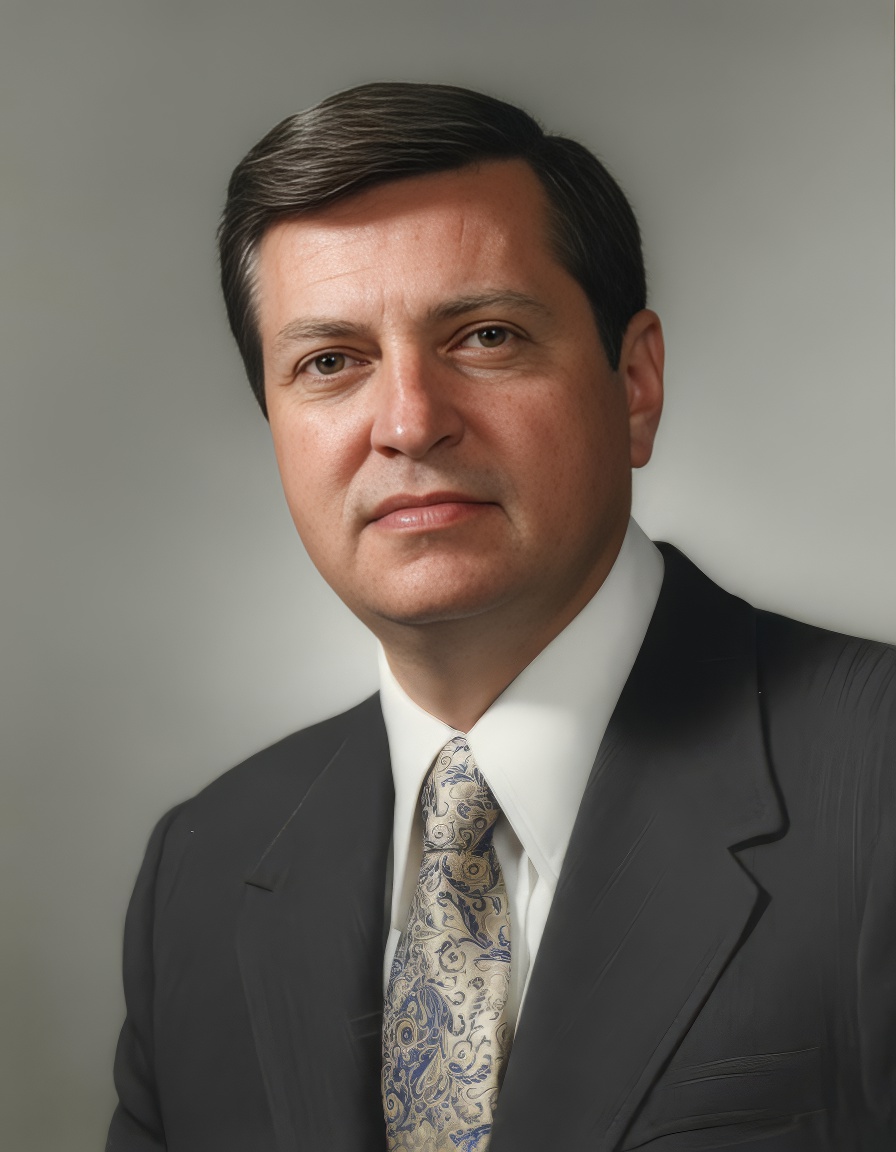
S. Robert Davis
(Click to enlarge)
S. Robert Davis: Rise to Power
The enigmatic outsider who toppled a Columbus institution
"Power is an area I'm a little naive in."
That's like hearing Larry Flynt say he needs an elementary course in sex education. In offices and board rooms all over town, you can almost hear the chuckles; if there's one thing Bob Davis has proved he's not naive about, it's financial power and how to use it.
And use it he has, first in real estate development; then in building a tiny fast food company into Orange-co, a fish-and-chips and citrus processing giant; and most recently in becoming a major, perhaps controlling force in Buckeye Federal Savings and Loan Association.
The Real Estate Empire
It's not hard to see why Davis's interests still revolve more around bricks and mortar than fish and chips. In documents filed with the Federal Home Loan Bank Board during the Buckeye flap, Davis listed personal real estate holdings worth, by his own estimate, at least $10 million. His holdings at the end of 1976 included about 400 apartment units; two office buildings; nearly 1,000 acres of undeveloped land; two islands in Canada; six fast-food stores - three Kentucky Fried Chicken, two Arthur Treacher's and one Pizza Hut; a 500-acre apple orchard; shares in two real estate partnerships; and one funeral home.
With total real estate debts listed at just over $5 million, Davis may be one of the least-heavily-mortgaged real estate investors around.
A Ruthless Reputation
That kind of money can be translated into lots of clout, and Davis has a reputation for using financial leverage with ruthless skill. "He's shrewd and he's rough," says one local businessman. "I wouldn't want to slug it out with him unless I was damn sure I had more firepower." If Columbus people needed any additional evidence of Davis' potency, the Buckeye confrontation surely provided it: Davis faced off against Bill and Steve Guthrie on several major issues and came out ahead almost every time.
It wasn't the first time Davis had matched wits and financial muscle in a winner-take-all contest and come out on top. Sam Fountas, the flamboyant former owner of 16 East Restaurant and one of Davis' early partners in restaurant and fast food deals, found himself on the short end of almost everything after the two had a falling-out in the early 1970s. In a series of lawsuits, Fountas accused Davis of fraud, threats, intimidation and coercion. But it was Davis, in suits and countersuits of his own, who wound up with almost all the marbles. Fountas' real estate investments began collapsing a year or so later, and he hasn't surfaced in Columbus since 1975.
Davis downplays his reputation as a ruthless infighter. "It's important to pursue your goals with great vigor," he says, "and it's important not to get sidetracked.... But there are many bright and tough people in Columbus.... I'm flattered that might be said about me, but I think it's exaggerated in my case."
Civic Engagement
Davis has begun in recent years to donate substantially to several nonprofit organizations, most notably Ohio Dominican College, where he currently serves as president of the board of trustees. That position gave him the chance last summer to confer an honorary degree on financier John Galbreath, one of the few people for whom Davis expresses unabashed admiration.
Davis professes dedication first to his family - wife Marilyn and four children; second to the businesses which he calls "my second love"; and third to "making Columbus a better place to live." He says he intends to spend an increasing share of his time on the third objective.
Although he's thrown an occasional, expensively Gatsbyesque bash at his home, Davis contends he generally lives "a very quiet life, one I happen to enjoy. I have no plans to change my lifestyle."